Punakha Dzong (Pungtang Dechen Photrang)
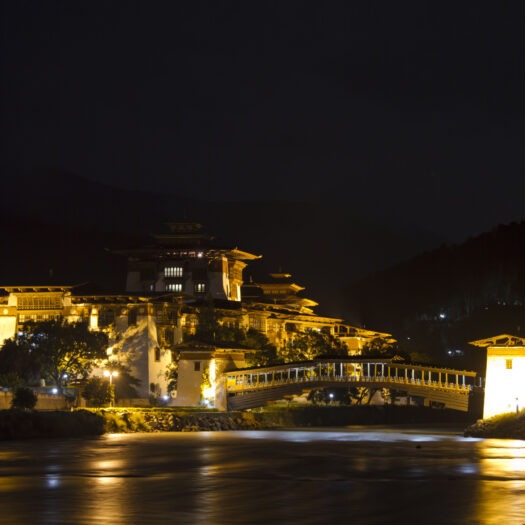
Commanding the junction where the Pho Chhu (father) and Mo Chhu (mother) rivers meet, Punakha Dzong is widely regarded as the pinnacle of classical Bhutanese fortress architecture. Constructed in 1637 by Zhabdrung Ngawang Namgyal, this massive citadel served as Bhutan’s seat of government until the mid-20th century and remains the official winter residence of the Je Khenpo (Chief Abbot) and the Central Monastic Body. The complex is accessed via a traditional roofed wooden cantilever bridge (Bazum) and features three grand inner courtyards (docheys) framed by whitewashed stone ramparts, towering timber pillars, and intricate gold-and-red woodwork.
Local guides advise timing your visit for mid-afternoon, when light reflects off the turquoise river waters onto the fortress walls. In the spring months of March and April, the surrounding grounds are blanketed in purple jacaranda blossoms, creating one of the most celebrated visual contrasts in the Himalayas. Inside the third courtyard, travelers can stand before the towering Kuenrey (grand assembly hall), where colossal statues of the Buddha, Guru Rinpoche, and Zhabdrung watch over centuries of living spiritual statecraft.